
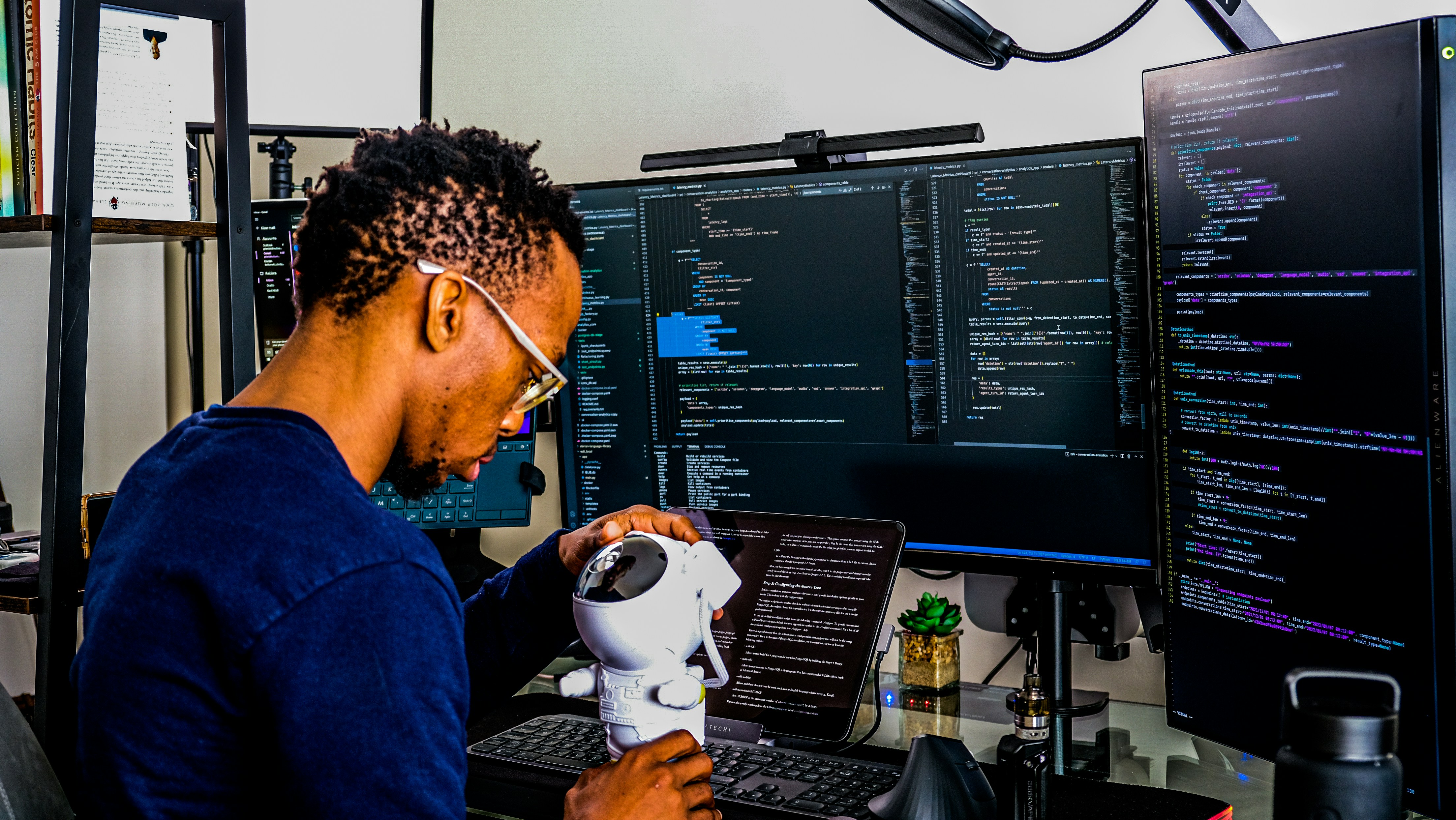




Virtual Reality (VR) is one of the most exciting technologies of the modern digital age. It has transformed the way people learn, work, communicate, and entertain themselves by creating immersive digital environments that simulate real-world or imaginary experiences. Unlike traditional computer screens, Virtual Reality places users inside a three-dimensional digital world where they can interact with objects and environments as if they were physically present.
Over the past decade, Virtual Reality has evolved from an experimental technology into a powerful tool used across industries such as education, healthcare, gaming, engineering, architecture, military training, tourism, and business. Advances in Artificial Intelligence (AI), cloud computing, high-speed internet, and graphics technology have made VR more realistic, affordable, and accessible than ever before.
As the digital world continues to expand, Virtual Reality is expected to become an essential part of everyday life. Understanding how VR works and its impact on society is important for students, technology enthusiasts, entrepreneurs, and businesses preparing for the future.
This article explores what Virtual Reality is, how it works, its technologies, applications, advantages, challenges, career opportunities, and future trends.
What Is Virtual Reality?
Virtual Reality, commonly known as VR, is a technology that creates a fully immersive computer-generated environment where users can interact with digital objects and surroundings using specialized equipment such as VR headsets, controllers, gloves, and motion sensors.
Unlike Augmented Reality (AR), which adds digital elements to the real world, Virtual Reality completely replaces the user's physical surroundings with a digital environment. When wearing a VR headset, users can look around, move, and interact within a virtual world as though they are actually there.
Virtual Reality can simulate real-world locations, historical sites, outer space, underwater environments, or entirely fictional worlds created by developers.
The History of Virtual Reality
The idea of Virtual Reality dates back several decades. Early researchers explored ways to create immersive digital experiences using computer graphics and display technology.
As computers became more powerful, VR systems improved significantly. Advances in graphics processing, motion tracking, sensors, and display technology allowed Virtual Reality to become more realistic and responsive.
Today, major technology companies continue investing in VR hardware and software, making immersive experiences available to consumers, businesses, educators, and healthcare professionals around the world.
How Virtual Reality Works
Virtual Reality combines several technologies to create immersive experiences.
VR Headset
The VR headset is the primary device used to display the virtual environment.
It contains high-resolution screens placed close to the user's eyes, creating the illusion of being inside a three-dimensional world.
Motion Tracking
Sensors track the movement of the user's head and body.
As users turn or move, the virtual environment updates instantly to match their perspective.
Controllers
Handheld controllers allow users to interact with virtual objects.
Users can pick up items, press buttons, manipulate tools, and perform various actions within the virtual world.
Audio System
Spatial audio creates realistic sound effects based on the user's position.
This greatly enhances immersion by making digital environments feel more lifelike.
Computer or Processing Unit
A computer, gaming console, or standalone headset processes graphics and controls the VR experience.
Powerful processors ensure smooth performance and realistic visuals.
Types of Virtual Reality
There are several forms of Virtual Reality.
Fully Immersive VR
Users wear VR headsets and interact entirely within a digital environment.
This is the most advanced form of Virtual Reality.
Semi-Immersive VR
Semi-immersive systems combine large displays with limited interaction.
Flight simulators are a common example.
Non-Immersive VR
Users interact with virtual environments using standard computer screens and input devices without wearing a headset.
Many simulation games fall into this category.
Technologies Behind Virtual Reality
Several advanced technologies make VR possible.
Artificial Intelligence
AI enhances Virtual Reality by creating intelligent virtual characters, improving user interactions, and personalizing experiences.
Computer Graphics
High-quality 3D graphics create realistic virtual environments.
Modern graphics engines produce detailed lighting, textures, and animations.
Motion Sensors
Motion sensors detect user movement and improve interaction accuracy.
Cloud Computing
Cloud platforms provide storage, processing power, and online collaboration for advanced VR applications.
5G Connectivity
High-speed internet reduces latency and supports multiplayer VR experiences with smoother performance.
Applications of Virtual Reality
Virtual Reality is transforming many industries.
Education
Schools and universities use VR to create immersive learning experiences.
Students can:
- Explore ancient civilizations.
- Visit museums virtually.
- Study human anatomy.
- Perform scientific experiments safely.
- Learn engineering concepts interactively.
VR makes education more engaging and memorable.
Healthcare
Healthcare professionals use VR for:
- Medical training.
- Surgical simulations.
- Physical rehabilitation.
- Mental health therapy.
- Pain management.
VR allows doctors and students to practice complex procedures in safe virtual environments.
Gaming
Gaming is one of the largest applications of Virtual Reality.
Players can:
- Explore realistic virtual worlds.
- Interact naturally with game environments.
- Participate in multiplayer experiences.
- Enjoy immersive storytelling.
VR has transformed modern gaming by creating highly interactive experiences.
Architecture and Engineering
Architects and engineers use VR to visualize building designs before construction begins.
Clients can explore virtual buildings and suggest improvements early in the design process.
Business and Collaboration
Companies use VR for:
- Virtual meetings.
- Employee training.
- Product demonstrations.
- Team collaboration.
- Remote presentations.
Virtual workspaces improve communication between teams located in different countries.
Tourism
Tourists can experience famous landmarks, museums, hotels, and destinations through Virtual Reality before traveling.
This helps travelers make informed decisions.
Military and Aviation
Military organizations and aviation companies use VR simulations for realistic training exercises without exposing personnel to unnecessary risks.
Manufacturing
Factories use VR to train employees, improve production planning, and test equipment before deployment.
Benefits of Virtual Reality
Virtual Reality offers numerous advantages.
Improved Learning
Immersive experiences help students understand complex concepts more effectively.
Enhanced Training
Professionals practice skills safely before performing real-world tasks.
Better Customer Experiences
Businesses create engaging product demonstrations and virtual shopping experiences.
Increased Productivity
Organizations improve employee performance through realistic simulations.
Cost Savings
Virtual training reduces travel, equipment, and operational costs.
Greater Accessibility
People can explore locations and experiences that may otherwise be difficult or impossible to visit.
Innovation
Virtual Reality encourages creative solutions across many industries.
Challenges of Virtual Reality
Despite its many advantages, Virtual Reality also faces several challenges.
High Equipment Costs
Advanced VR headsets and supporting hardware can be expensive.
Motion Sickness
Some users experience discomfort during prolonged VR sessions.
Developers continue improving display technology to reduce these effects.
Hardware Requirements
High-quality VR applications often require powerful computers or specialized standalone devices.
Content Development
Creating realistic virtual environments requires significant time, expertise, and financial investment.
Privacy and Security
VR systems collect movement and interaction data.
Organizations must protect user information responsibly.
Virtual Reality and Artificial Intelligence
Artificial Intelligence makes Virtual Reality more intelligent and responsive.
AI enables:
- Smart virtual assistants.
- Realistic digital characters.
- Adaptive learning experiences.
- Personalized simulations.
- Improved speech recognition.
The combination of AI and VR is expected to revolutionize education, healthcare, customer service, and entertainment.
Virtual Reality and the Metaverse
The concept of the metaverse has increased interest in Virtual Reality.
VR allows users to enter shared digital environments where they can work, learn, shop, socialize, attend events, and play games.
Although the metaverse continues to evolve, Virtual Reality is expected to play a major role in its future development.
Skills Needed for Virtual Reality Development
Professionals working in Virtual Reality often develop expertise in:
- Programming
- 3D Modeling
- Computer Graphics
- Game Development
- Artificial Intelligence
- User Experience (UX) Design
- Computer Vision
- Mathematics
- Problem-solving
- Creativity
Learning these skills opens opportunities in one of today's fastest-growing technology sectors.
Career Opportunities in Virtual Reality
The growing popularity of VR has created exciting career opportunities.
Popular job roles include:
- VR Developer
- Software Engineer
- Game Developer
- 3D Artist
- Computer Graphics Engineer
- UX/UI Designer
- Simulation Engineer
- AI Engineer
- Product Designer
- Technical Consultant
Many industries now employ professionals with Virtual Reality expertise.
The Future of Virtual Reality
The future of Virtual Reality is extremely promising.
Advances in Artificial Intelligence, cloud computing, wearable technology, 5G, and graphics processing will continue improving VR experiences.
Future developments may include:
- Virtual classrooms.
- Remote healthcare consultations.
- Advanced engineering simulations.
- Immersive business collaboration.
- Virtual tourism.
- Digital entertainment.
- Smart manufacturing.
- Scientific research.
- Remote workforce training.
- Interactive social experiences.
As technology becomes more affordable, VR is expected to become increasingly common in homes, schools, and workplaces.
Why Learning Virtual Reality Matters
Understanding Virtual Reality prepares individuals for the future of technology.
Students gain valuable technical knowledge and practical skills.
Entrepreneurs discover innovative ways to engage customers.
Businesses improve training, collaboration, and product development.
Technology professionals gain access to exciting career opportunities in software development, game design, healthcare, education, engineering, and entertainment.
Whether your goal is career advancement, innovation, or business growth, learning about Virtual Reality provides valuable opportunities in today's digital economy.
Conclusion
Virtual Reality has become one of the most transformative technologies of the modern era. By creating immersive digital environments, VR is changing how people learn, work, communicate, receive healthcare, design products, and enjoy entertainment. Its applications continue expanding across industries, making it an essential technology for the future.
Although challenges such as equipment costs, hardware requirements, and privacy concerns remain, continuous advancements in Artificial Intelligence, cloud computing, 5G, and graphics technology are making Virtual Reality more practical and accessible. As adoption grows, VR will continue shaping education, business, healthcare, manufacturing, tourism, and many other fields.
For students, entrepreneurs, developers, and technology enthusiasts, understanding Virtual Reality is an investment in the future. It opens doors to exciting careers, encourages innovation, and provides insight into one of the most influential technologies of the digital age.
At Dandon Tech, we are committed to delivering original technology news, programming tutorials, AI insights, cybersecurity guides, cloud computing resources, software engineering articles, and educational content to help our readers stay informed and succeed in the rapidly evolving world of technology.
Comments (0)
No comments yet. Be the first!