




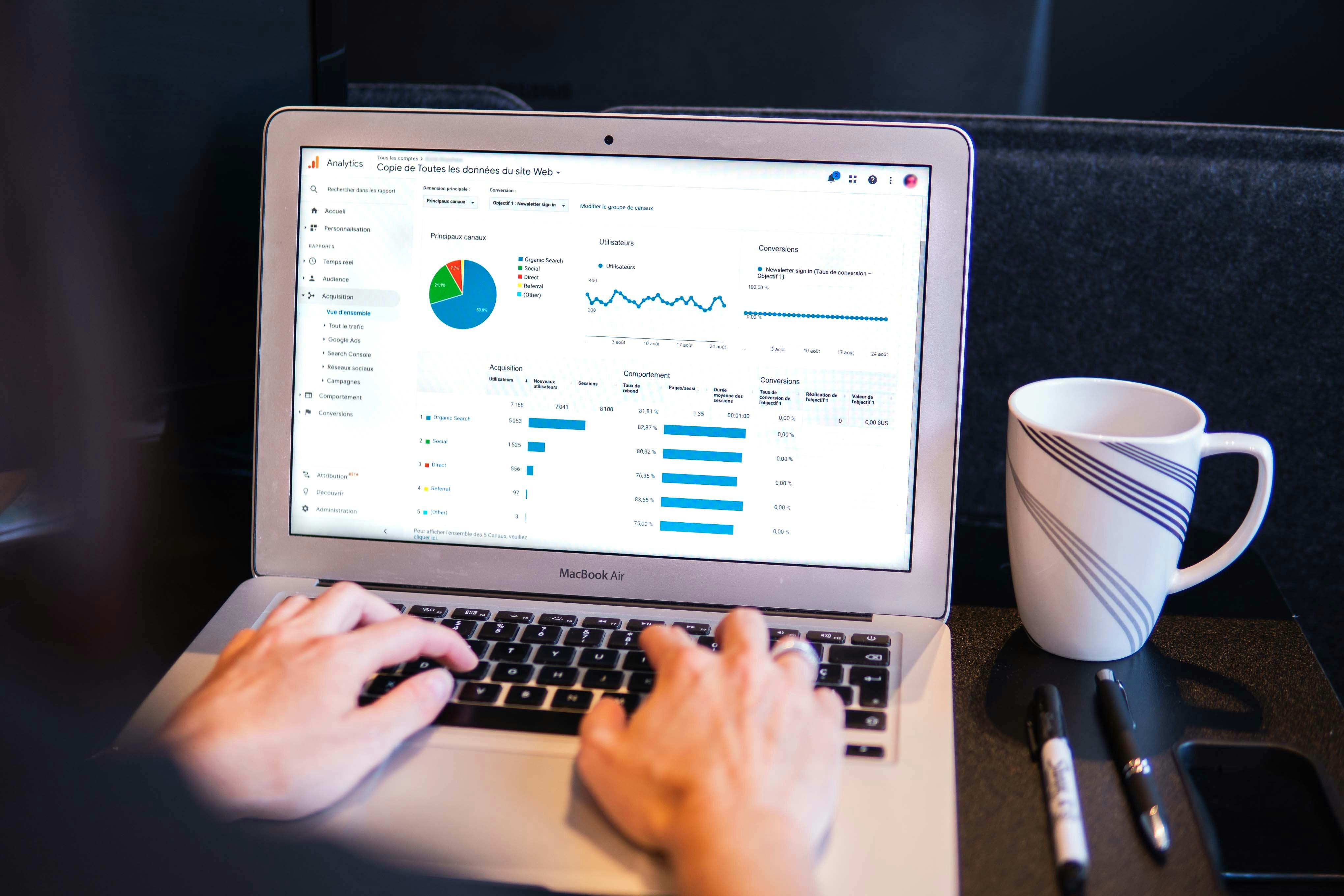
In today's digital world, data has become one of the most valuable resources for businesses, governments, healthcare organizations, educational institutions, and individuals. Every online transaction, social media interaction, website visit, financial payment, and mobile application generates data that can provide meaningful insights when properly analyzed. However, raw data alone has little value unless it is organized, examined, and interpreted effectively. This is where data analysis plays a crucial role.
Data analysis is the process of inspecting, cleaning, organizing, interpreting, and transforming data to discover useful information that supports decision-making. Organizations rely on data analysis to understand customer behavior, improve products, reduce costs, predict future trends, and gain a competitive advantage. From small businesses to multinational corporations, data analysis has become an essential tool for making informed decisions.
As technology continues to evolve through Artificial Intelligence (AI), Machine Learning (ML), Big Data, and Cloud Computing, the importance of data analysis continues to grow. This article explains what data analysis is, how it works, its different types, techniques, applications, benefits, challenges, career opportunities, and why it is one of the most valuable skills in today's digital economy.
What Is Data Analysis?
Data analysis is the process of collecting, organizing, cleaning, examining, and interpreting data to identify patterns, relationships, trends, and insights that can help solve problems and support decision-making.
The main objective of data analysis is to convert raw information into meaningful knowledge that organizations can use to improve performance, increase efficiency, and make better strategic decisions.
For example, an online store can analyze customer purchasing habits to recommend products, while a hospital can analyze patient data to improve treatment plans.
Why Data Analysis Is Important
Modern organizations generate enormous amounts of data every day. Without proper analysis, this information would remain unused and provide little value.
Data analysis is important because it helps organizations:
- Make informed decisions.
- Understand customer behavior.
- Improve business performance.
- Reduce operational costs.
- Detect fraud and unusual activities.
- Predict future trends.
- Improve product quality.
- Increase customer satisfaction.
- Support innovation.
- Reduce business risks.
Organizations that effectively analyze data often outperform competitors because they can respond more quickly to changing market conditions.
How Data Analysis Works
Data analysis follows a structured process.
Data Collection
The first step involves gathering data from different sources such as:
- Websites
- Mobile applications
- Databases
- Surveys
- Social media
- Business systems
- Sensors
- Financial records
The quality of collected data directly affects the accuracy of the analysis.
Data Cleaning
Raw data often contains missing values, duplicate records, incorrect information, or formatting errors.
Data cleaning removes these problems to ensure accurate analysis.
Data Organization
After cleaning, the information is organized into structured formats such as spreadsheets or databases.
Proper organization makes analysis easier and more efficient.
Data Analysis
Analysts use statistical methods, software tools, and visualization techniques to identify patterns and relationships within the data.
Interpretation
The results are interpreted to answer business questions and support decision-making.
Reporting
Finally, insights are presented through reports, dashboards, graphs, and charts that are easy for stakeholders to understand.
Types of Data Analysis
There are several types of data analysis, each serving a different purpose.
Descriptive Analysis
Descriptive analysis explains what has already happened.
It summarizes historical information using statistics, charts, and reports.
Examples include:
- Monthly sales reports
- Website visitor statistics
- Customer demographics
Diagnostic Analysis
Diagnostic analysis investigates why something happened.
It helps organizations identify the causes of business successes or problems.
For example, a retailer may analyze why sales decreased during a particular month.
Predictive Analysis
Predictive analysis uses historical data and statistical models to forecast future events.
Businesses use predictive analysis for:
- Sales forecasting
- Customer behavior prediction
- Risk assessment
- Demand forecasting
Prescriptive Analysis
Prescriptive analysis recommends the best actions to achieve desired outcomes.
It combines data analysis with Artificial Intelligence and optimization techniques.
Common Data Analysis Techniques
Data analysts use several methods to extract valuable insights.
Statistical Analysis
Statistics helps summarize data, identify trends, and measure relationships.
Data Visualization
Charts, graphs, dashboards, and maps make complex information easier to understand.
Popular visualizations include:
- Bar charts
- Pie charts
- Line graphs
- Scatter plots
- Heat maps
Data Mining
Data mining discovers hidden patterns within large datasets.
Businesses use it to identify customer preferences and market trends.
Machine Learning
Machine learning algorithms automatically identify patterns and improve predictions as more data becomes available.
Regression Analysis
Regression analysis examines relationships between variables to predict future outcomes.
Popular Tools Used for Data Analysis
Data analysts use many professional software tools.
Common tools include:
- Microsoft Excel
- SQL
- Python
- R
- Power BI
- Tableau
- Google Looker Studio
- Apache Spark
These tools help process, analyze, and visualize large datasets efficiently.
Applications of Data Analysis
Data analysis is transforming many industries.
Business
Businesses analyze customer behavior, sales performance, inventory, and marketing campaigns to improve profitability.
Healthcare
Hospitals use data analysis to monitor patient outcomes, improve diagnoses, optimize treatments, and support medical research.
Banking and Finance
Financial institutions detect fraud, assess investment risks, analyze customer transactions, and forecast market trends.
Education
Educational institutions analyze student performance, attendance, and learning outcomes to improve academic success.
Marketing
Marketing teams analyze customer preferences, advertising campaigns, and purchasing behavior to improve sales.
Manufacturing
Factories use data analysis to improve production efficiency, monitor equipment performance, and reduce waste.
Agriculture
Farmers analyze weather data, soil conditions, irrigation systems, and crop performance to increase productivity.
Government
Governments use data analysis for public health, transportation planning, crime prevention, and policy development.
Benefits of Data Analysis
Data analysis offers numerous advantages.
Better Decision-Making
Organizations make decisions based on evidence rather than assumptions.
Increased Efficiency
Data helps identify areas where operations can be improved.
Cost Reduction
Businesses reduce unnecessary expenses through improved planning and resource allocation.
Improved Customer Experience
Companies understand customer preferences and provide personalized products and services.
Competitive Advantage
Organizations using data effectively often outperform competitors.
Risk Management
Data analysis helps identify potential problems before they become serious.
Data Analysis and Artificial Intelligence
Artificial Intelligence enhances data analysis by automating complex tasks.
AI systems can:
- Detect hidden patterns.
- Predict future outcomes.
- Automate reporting.
- Identify unusual activities.
- Improve business recommendations.
The combination of AI and data analysis is transforming industries worldwide.
Data Analysis and Big Data
Big Data refers to extremely large datasets generated from various digital sources.
Traditional analysis methods often struggle with massive datasets.
Modern technologies allow organizations to analyze billions of records quickly and efficiently.
Big Data and data analysis work together to support large-scale business intelligence.
Challenges in Data Analysis
Although data analysis offers many benefits, several challenges remain.
Poor Data Quality
Incorrect or incomplete information can produce misleading results.
Data Privacy
Organizations must protect sensitive personal information and comply with privacy regulations.
Large Data Volumes
Managing massive datasets requires advanced technology and computing resources.
Security Risks
Organizations must protect valuable information from cyberattacks and unauthorized access.
Technical Complexity
Data analysis often requires knowledge of statistics, programming, and specialized software.
Skills Needed for Data Analysis
Successful data analysts develop both technical and soft skills.
Technical skills include:
- Microsoft Excel
- SQL
- Python
- Statistics
- Data visualization
- Database management
- Business intelligence tools
- Cloud computing
- Basic machine learning
Soft skills include:
- Critical thinking
- Communication
- Problem-solving
- Attention to detail
- Curiosity
- Teamwork
Continuous learning is essential because technology evolves rapidly.
Career Opportunities in Data Analysis
Data analysis offers excellent career opportunities across many industries.
Popular job roles include:
- Data Analyst
- Business Analyst
- Business Intelligence Analyst
- Financial Analyst
- Marketing Analyst
- Healthcare Data Analyst
- Operations Analyst
- Data Visualization Specialist
- Research Analyst
- Product Analyst
These careers are in high demand because organizations increasingly rely on data-driven decision-making.
The Future of Data Analysis
The future of data analysis is extremely promising.
Artificial Intelligence and Machine Learning will continue automating many analytical processes while improving prediction accuracy.
Cloud computing will make advanced analytics accessible to businesses of all sizes.
Real-time analytics will allow organizations to make immediate decisions using live data.
Industries such as healthcare, finance, education, transportation, agriculture, manufacturing, and e-commerce will continue investing heavily in data analysis technologies.
As the amount of global data continues to grow, demand for skilled data analysts will increase significantly.
Why Learning Data Analysis Matters
Learning data analysis provides valuable opportunities for students, entrepreneurs, business owners, and technology professionals.
Businesses depend on accurate analysis to improve operations and customer satisfaction.
Entrepreneurs use data to understand markets and make smarter business decisions.
Students gain practical skills that open doors to careers in technology, finance, healthcare, marketing, and research.
Whether your goal is employment, business growth, or personal development, data analysis is one of the most valuable digital skills you can learn today.
Conclusion
Data analysis has become one of the most essential disciplines in the modern digital economy. By transforming raw information into meaningful insights, it helps organizations make informed decisions, improve efficiency, reduce costs, predict future trends, and create better products and services.
From healthcare and finance to education, agriculture, marketing, and government, data analysis is driving innovation across nearly every industry. As technologies such as Artificial Intelligence, Machine Learning, Big Data, and Cloud Computing continue to evolve, the importance of data analysis will only continue to grow.
For students, entrepreneurs, and technology enthusiasts, learning data analysis is an investment in the future. It provides practical problem-solving skills, supports evidence-based decision-making, and creates exciting career opportunities in one of the world's fastest-growing fields.
At Dandon Tech, we are committed to delivering original technology news, programming tutorials, AI insights, cybersecurity guides, software reviews, cloud computing resources, and educational content to help our readers stay informed and succeed in the rapidly evolving world of technology.
Comments (0)
No comments yet. Be the first!