




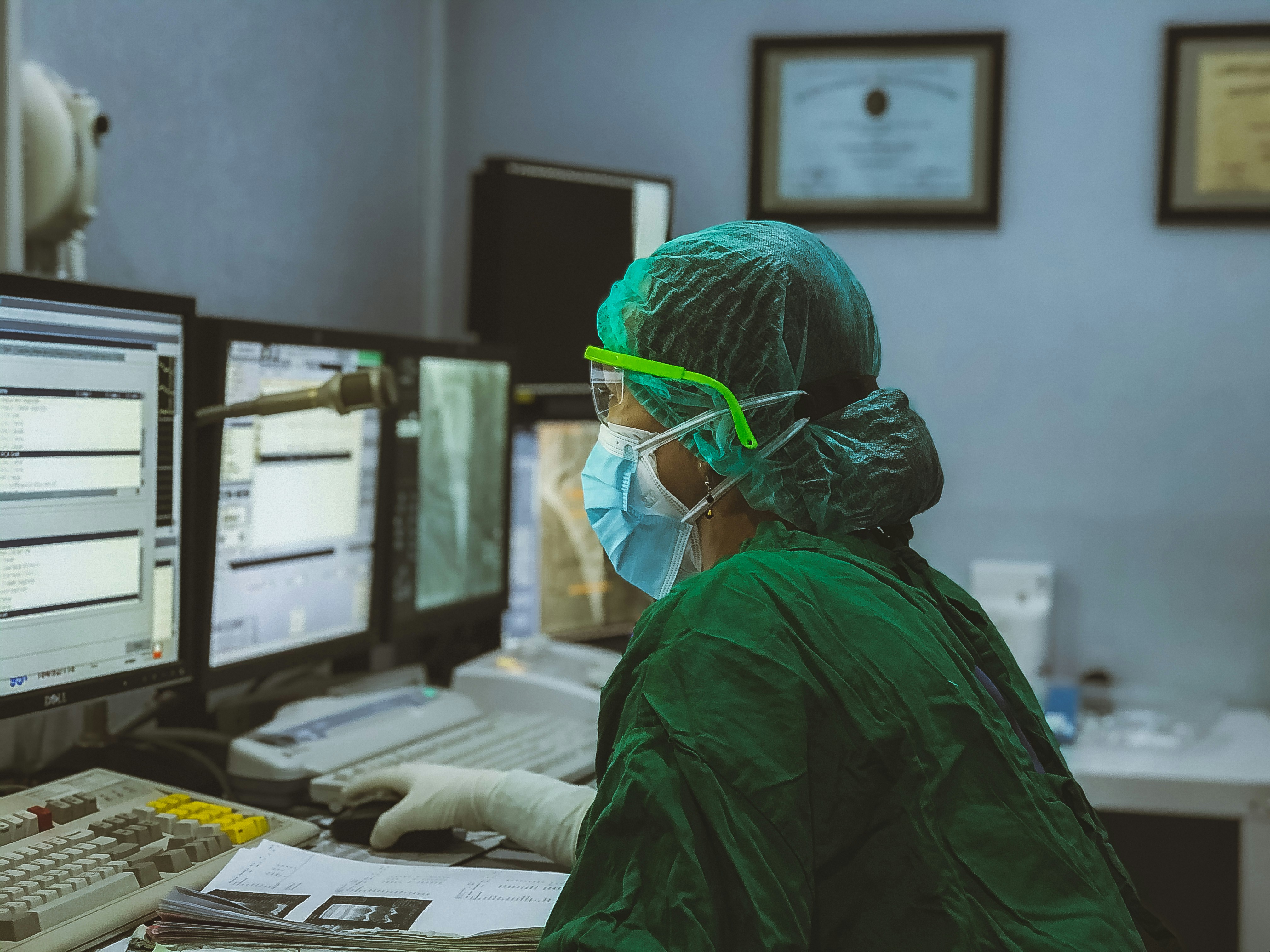
Artificial Intelligence (AI) is revolutionizing industries across the world, and healthcare is one of the sectors experiencing the greatest transformation. Hospitals, clinics, pharmaceutical companies, research institutions, and healthcare professionals are increasingly using AI to improve patient care, accelerate medical research, enhance diagnosis, and streamline hospital operations.
The growing amount of medical data generated every day makes it difficult for healthcare professionals to analyze every piece of information quickly and accurately. Artificial Intelligence helps solve this challenge by analyzing vast amounts of medical data, recognizing patterns, supporting clinical decisions, and automating repetitive tasks. As a result, healthcare providers can deliver faster, more accurate, and more personalized care.
Today, AI is used in disease diagnosis, medical imaging, robotic surgery, drug discovery, patient monitoring, virtual health assistants, hospital management, and predictive healthcare. Combined with technologies such as Machine Learning, Big Data, Cloud Computing, the Internet of Things (IoT), and Robotics, Artificial Intelligence is shaping the future of medicine.
Understanding the role of AI in healthcare is important for students, healthcare professionals, entrepreneurs, and technology enthusiasts because it represents one of the fastest-growing areas of innovation. This article explains what AI in healthcare is, how it works, its applications, benefits, challenges, career opportunities, and future prospects.
What Is Artificial Intelligence in Healthcare?
Artificial Intelligence in healthcare refers to the use of computer systems that can perform tasks requiring human intelligence to improve medical services and healthcare delivery.
AI systems can analyze medical information, recognize patterns, make predictions, support clinical decisions, and automate routine processes.
Unlike traditional computer programs that simply follow fixed instructions, many AI systems can learn from data and improve their performance over time using Machine Learning.
AI does not replace doctors or nurses. Instead, it supports healthcare professionals by providing valuable insights that help improve patient care and decision-making.
Why AI Is Important in Healthcare
Healthcare organizations generate enormous amounts of information every day.
Examples include:
- Electronic health records
- Medical images
- Laboratory results
- Prescription records
- Patient monitoring data
- Genetic information
- Research studies
- Hospital management records
Analyzing this information manually can be time-consuming and prone to errors.
Artificial Intelligence helps healthcare providers:
- Improve diagnostic accuracy.
- Detect diseases earlier.
- Personalize treatments.
- Reduce administrative workload.
- Improve hospital efficiency.
- Support medical research.
- Enhance patient outcomes.
- Reduce healthcare costs.
These advantages make AI one of the most valuable technologies in modern healthcare.
How AI Works in Healthcare
Artificial Intelligence follows a structured process.
Data Collection
Healthcare systems collect information from:
- Medical records
- Wearable devices
- Diagnostic equipment
- Laboratory systems
- Medical imaging devices
- Health applications
Data Processing
AI organizes and prepares medical information for analysis.
Machine Learning
Machine learning algorithms study large datasets to identify patterns associated with diseases, treatments, and patient outcomes.
Prediction
AI predicts potential health risks and recommends appropriate actions based on historical information.
Clinical Support
Healthcare professionals review AI-generated insights before making medical decisions.
Human expertise remains essential throughout the process.
Applications of AI in Healthcare
Artificial Intelligence is transforming many areas of medicine.
Disease Diagnosis
AI helps identify diseases by analyzing symptoms, laboratory results, and medical images.
It can assist healthcare professionals in recognizing conditions more quickly and accurately.
Medical Imaging
AI supports the interpretation of X-rays, CT scans, MRI scans, and ultrasound images.
It helps identify abnormalities that may require further medical evaluation.
Drug Discovery
Developing new medicines traditionally requires many years of research.
AI accelerates drug discovery by identifying promising compounds and predicting how they may interact with diseases.
Personalized Medicine
AI helps healthcare providers recommend treatments tailored to individual patient characteristics, including medical history and genetic information.
Robotic Surgery
Surgeons use robotic systems with AI-assisted technologies to improve precision during certain procedures.
These systems support surgeons but do not replace their expertise.
Virtual Health Assistants
AI-powered virtual assistants help patients:
- Schedule appointments.
- Receive medication reminders.
- Access health information.
- Track symptoms.
- Communicate with healthcare providers.
Patient Monitoring
Wearable devices continuously monitor:
- Heart rate
- Blood pressure
- Blood oxygen levels
- Physical activity
- Sleep patterns
AI analyzes this information and alerts healthcare professionals when unusual patterns are detected.
Hospital Management
Hospitals use AI to improve:
- Staff scheduling
- Resource allocation
- Patient flow
- Equipment maintenance
- Inventory management
These improvements increase operational efficiency.
AI in Medical Research
Medical researchers use AI to analyze enormous amounts of scientific information.
AI assists with:
- Clinical trial analysis.
- Disease modeling.
- Genetic research.
- Drug development.
- Public health studies.
This accelerates scientific discoveries while reducing research costs.
AI and Medical Imaging
Medical imaging is one of AI's most successful applications.
AI helps analyze:
- X-rays
- MRI scans
- CT scans
- Mammograms
- Ultrasound images
These systems can highlight areas that may require closer examination, helping radiologists work more efficiently.
AI and Telemedicine
Telemedicine allows patients to receive healthcare remotely.
Artificial Intelligence enhances telemedicine by:
- Supporting virtual consultations.
- Assisting symptom assessment.
- Monitoring chronic conditions.
- Providing automated health guidance.
- Improving appointment scheduling.
Together, AI and telemedicine improve healthcare accessibility for people living in remote areas.
Benefits of AI in Healthcare
Artificial Intelligence offers many advantages.
Faster Diagnosis
AI analyzes medical information rapidly, helping healthcare professionals make timely decisions.
Improved Accuracy
AI assists clinicians by identifying patterns that may not be immediately obvious.
Better Patient Care
Personalized recommendations support more effective treatment plans.
Increased Efficiency
Automation reduces repetitive administrative tasks.
Reduced Costs
Improved efficiency can lower operational expenses while optimizing healthcare resources.
Early Disease Detection
AI can help identify potential health risks before symptoms become severe.
Enhanced Medical Research
Researchers analyze enormous datasets more efficiently, accelerating scientific discoveries.
Challenges of AI in Healthcare
Despite its advantages, AI also presents challenges.
Data Privacy
Healthcare organizations must protect sensitive patient information.
Strong security measures are essential.
Ethical Considerations
Healthcare professionals remain responsible for medical decisions.
AI should support—not replace—clinical judgment.
High Implementation Costs
Developing and deploying advanced AI systems requires significant investment.
Data Quality
AI systems depend on accurate, complete, and representative medical data.
Poor-quality data may reduce performance.
Regulatory Compliance
Healthcare organizations must comply with laws and regulations governing patient privacy and medical technologies.
AI and Cybersecurity in Healthcare
Healthcare organizations are attractive targets for cybercriminals because they store sensitive information.
AI supports cybersecurity by:
- Detecting unusual network activity.
- Identifying potential cyberattacks.
- Monitoring system behavior.
- Strengthening fraud detection.
At the same time, AI systems themselves require strong security protections.
Skills Needed to Work with AI in Healthcare
Professionals working in this field benefit from knowledge of:
- Artificial Intelligence
- Machine Learning
- Data Science
- Healthcare Systems
- Programming
- Statistics
- Cloud Computing
- Cybersecurity
- Medical Informatics
- Problem-solving
Collaboration between healthcare professionals and technology specialists is essential.
Career Opportunities
The rapid growth of AI in healthcare has created exciting career opportunities.
Popular roles include:
- AI Engineer
- Machine Learning Engineer
- Data Scientist
- Medical Data Analyst
- Healthcare Software Developer
- Clinical Informatics Specialist
- Health Information Manager
- Biomedical Engineer
- AI Research Scientist
- Healthcare Technology Consultant
These professionals contribute to improving healthcare systems worldwide.
The Future of AI in Healthcare
The future of Artificial Intelligence in healthcare is highly promising.
Future developments are expected in:
- More personalized medicine.
- Earlier disease detection.
- Improved robotic surgery.
- Faster drug discovery.
- Smarter hospital management.
- Advanced wearable health devices.
- Predictive healthcare.
- AI-assisted medical education.
- Better telemedicine services.
- Improved global healthcare accessibility.
Rather than replacing healthcare professionals, AI is expected to become an increasingly valuable tool that supports safer, faster, and more effective medical care.
Why Learning About AI in Healthcare Matters
Learning about Artificial Intelligence in healthcare prepares individuals for one of the fastest-growing fields in technology and medicine.
Students gain valuable interdisciplinary knowledge.
Healthcare professionals improve their understanding of emerging digital tools.
Entrepreneurs identify opportunities to develop innovative health technologies.
Technology professionals gain access to rewarding careers that combine computing with healthcare.
As digital transformation continues, AI skills will become increasingly valuable across the healthcare industry.
Conclusion
Artificial Intelligence is transforming healthcare by helping professionals analyze medical information, improve diagnosis, personalize treatments, accelerate research, and streamline hospital operations. Combined with technologies such as Machine Learning, Cloud Computing, Big Data, Robotics, and the Internet of Things, AI is creating more efficient and patient-centered healthcare systems.
Although challenges such as privacy, implementation costs, ethics, and data quality remain, ongoing technological advancements continue to improve the capabilities and reliability of AI-powered healthcare solutions. As adoption grows, AI will play an increasingly important role in improving medical services and supporting healthcare professionals around the world.
For students, entrepreneurs, developers, healthcare workers, and technology enthusiasts, understanding AI in healthcare is an investment in the future. It opens doors to exciting career opportunities, encourages innovation, and provides valuable insight into one of the most impactful applications of Artificial Intelligence.
At Dandon Tech, we are committed to delivering original technology news, programming tutorials, AI insights, cybersecurity guides, cloud computing resources, software engineering articles, and educational content to help our readers stay informed and succeed in the rapidly evolving world of technology.
Comments (0)
No comments yet. Be the first!